
admin
-
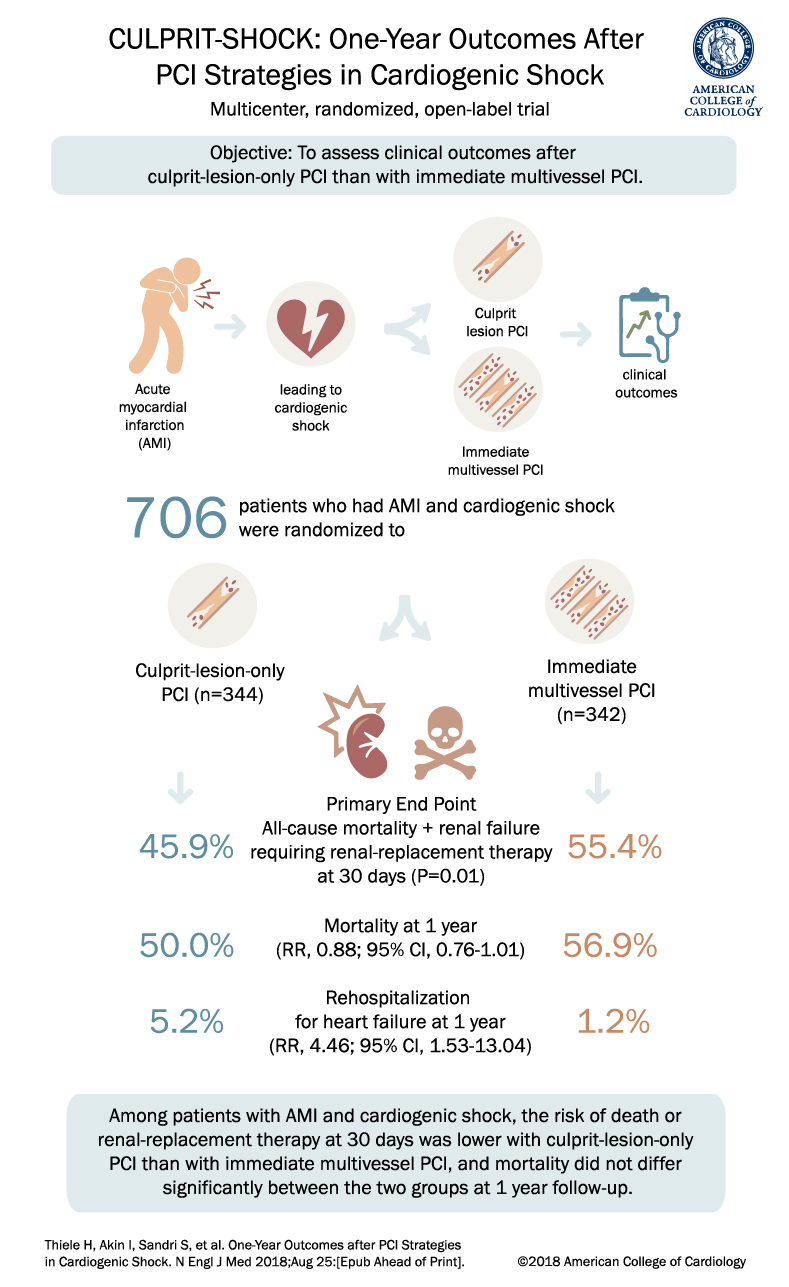
CULPRIT-SHOCK Trial: Culprit-Lesion-Only PCI vs Immediate Multivessel PCI in Cardiogenic Shock
The CULPRIT-SHOCK trial was an important randomized clinical trial that changed how interventional cardiologists think about PCI strategy in patients with acute myocardial infarction complicated by cardiogenic shock. The main finding was clinically important: in patients with AMI and cardiogenic shock, culprit-lesion-only PCI had better early outcomes than immediate multivessel PCI. Background Patients with acute…
-
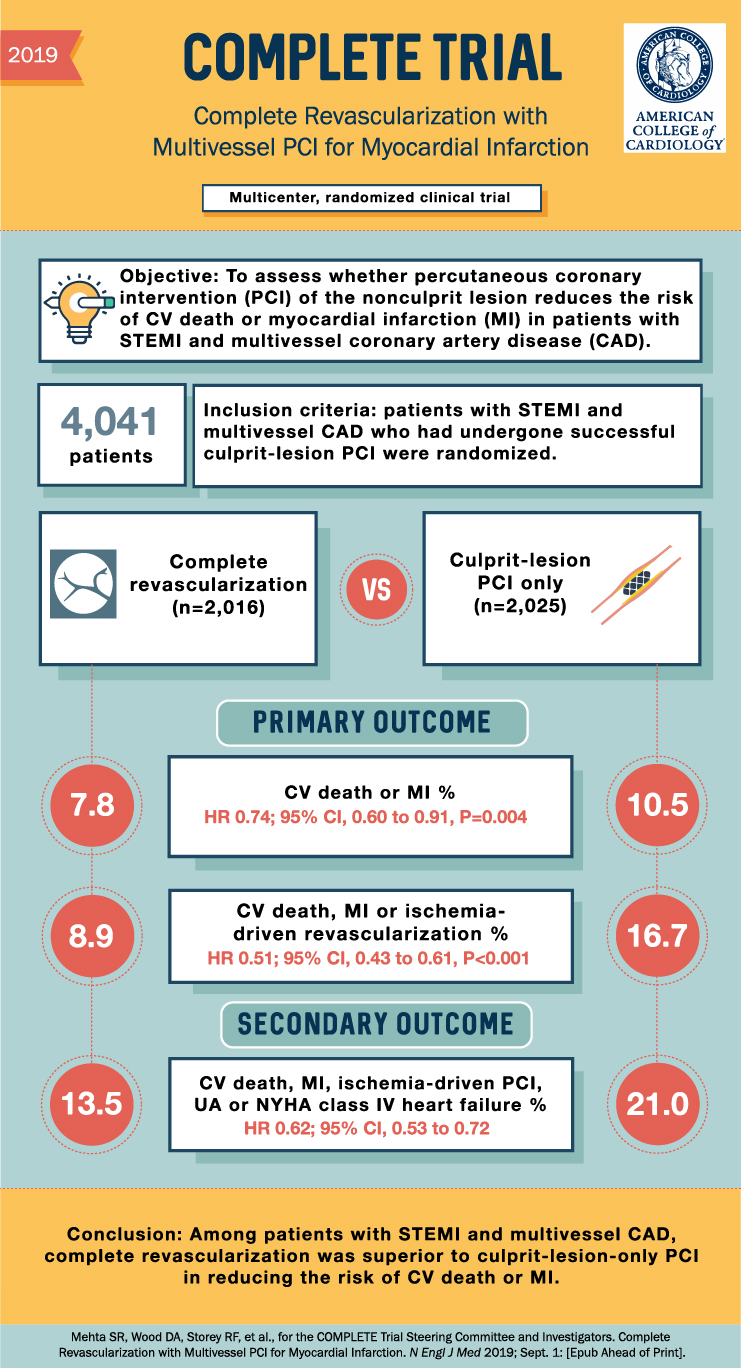
COMPLETE Trial: Complete Revascularization After STEMI With Multivessel CAD
The COMPLETE trial was a landmark randomized clinical trial that evaluated whether patients with ST-segment elevation myocardial infarction (STEMI) and multivessel coronary artery disease benefit from complete revascularization rather than treating only the culprit lesion. The key finding was clear: complete revascularization with multivessel PCI reduced major cardiovascular events compared with culprit-lesion-only PCI. Background In…
-
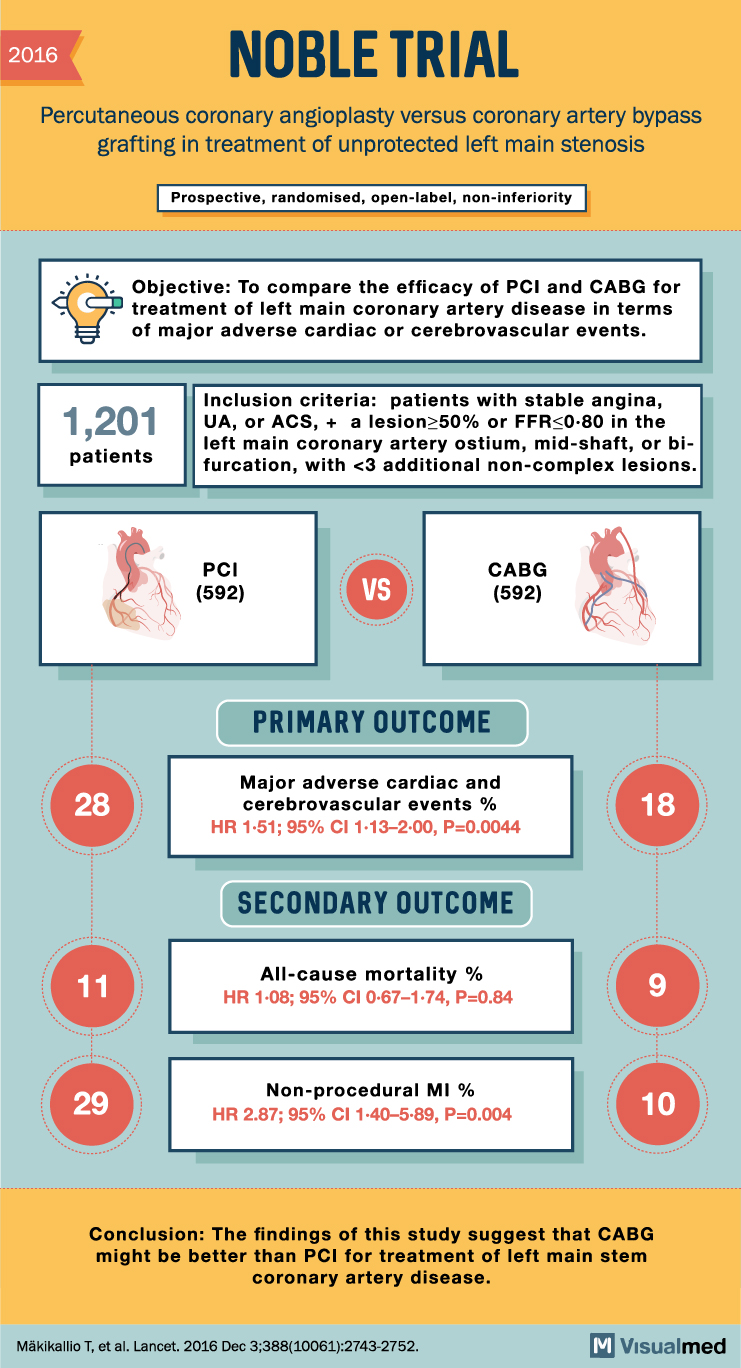
NOBLE Trial: PCI vs CABG for Unprotected Left Main Coronary Artery Disease
Introduction The NOBLE trial was an important randomized clinical trial comparing percutaneous coronary intervention (PCI) with coronary artery bypass grafting (CABG) in patients with unprotected left main coronary artery disease. Left main coronary artery disease is clinically important because the left main artery supplies a large portion of the myocardium. Revascularization is usually required, but…
-
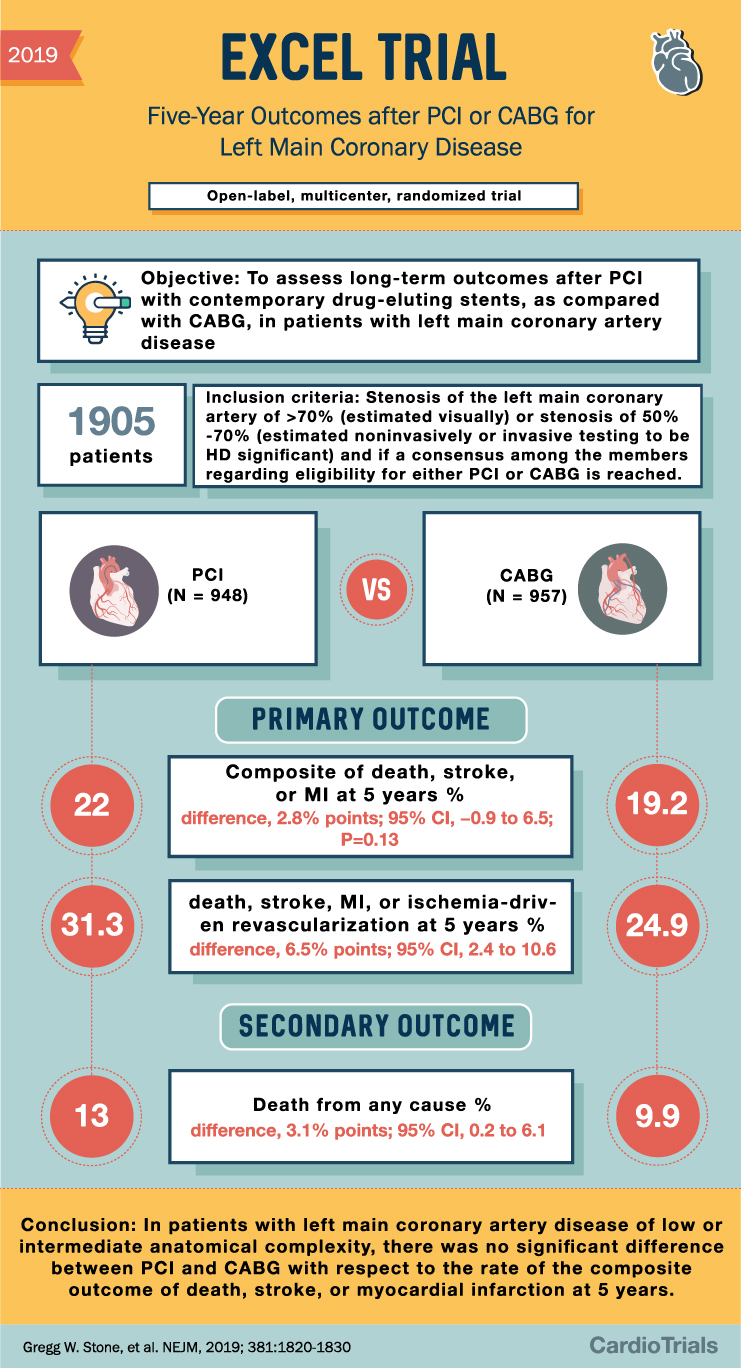
EXCEL Trial: PCI or CABG for Left Main Coronary Artery Disease
Introduction The EXCEL trial was a major randomized clinical trial comparing percutaneous coronary intervention (PCI) with coronary artery bypass grafting (CABG) in patients with left main coronary artery disease. Left main disease is one of the most important forms of coronary artery disease because the left main artery supplies a large portion of the heart…
-
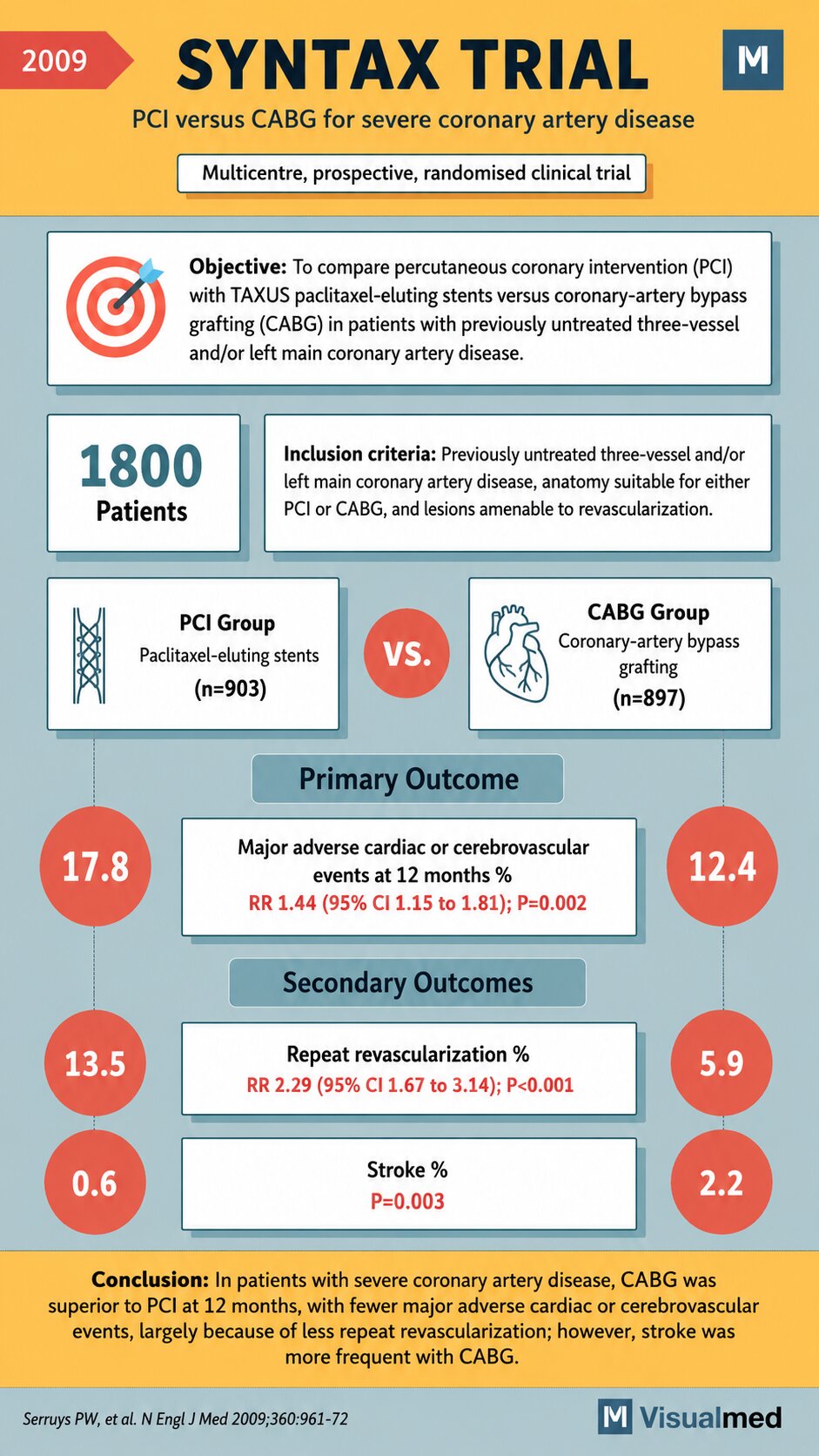
SYNTAX Trial: PCI vs CABG for Severe Coronary Artery Disease
The SYNTAX trial was a landmark randomized controlled trial comparing percutaneous coronary intervention (PCI) with coronary artery bypass grafting (CABG) in patients with complex coronary artery disease, specifically those with three-vessel disease and/or left main coronary artery disease. This trial helped shape modern decision-making for patients with severe coronary artery disease and remains one of…
-
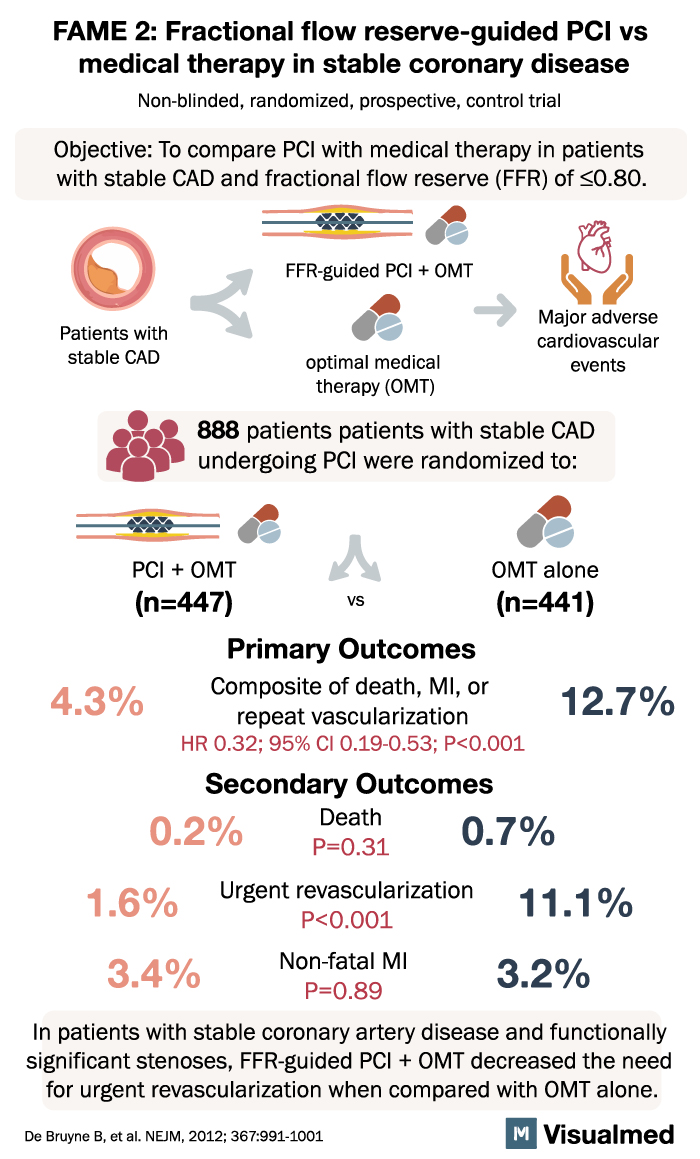
FAME 2 Trial: FFR-Guided PCI vs Medical Therapy in Stable CAD
The FAME 2 trial was a landmark cardiology trial that evaluated whether fractional flow reserve-guided PCI improves outcomes in patients with stable coronary artery disease and functionally significant coronary stenoses. Unlike trials that relied mainly on angiographic stenosis, the FAME 2 trial selected patients based on fractional flow reserve, or FFR. Patients with an FFR…
-
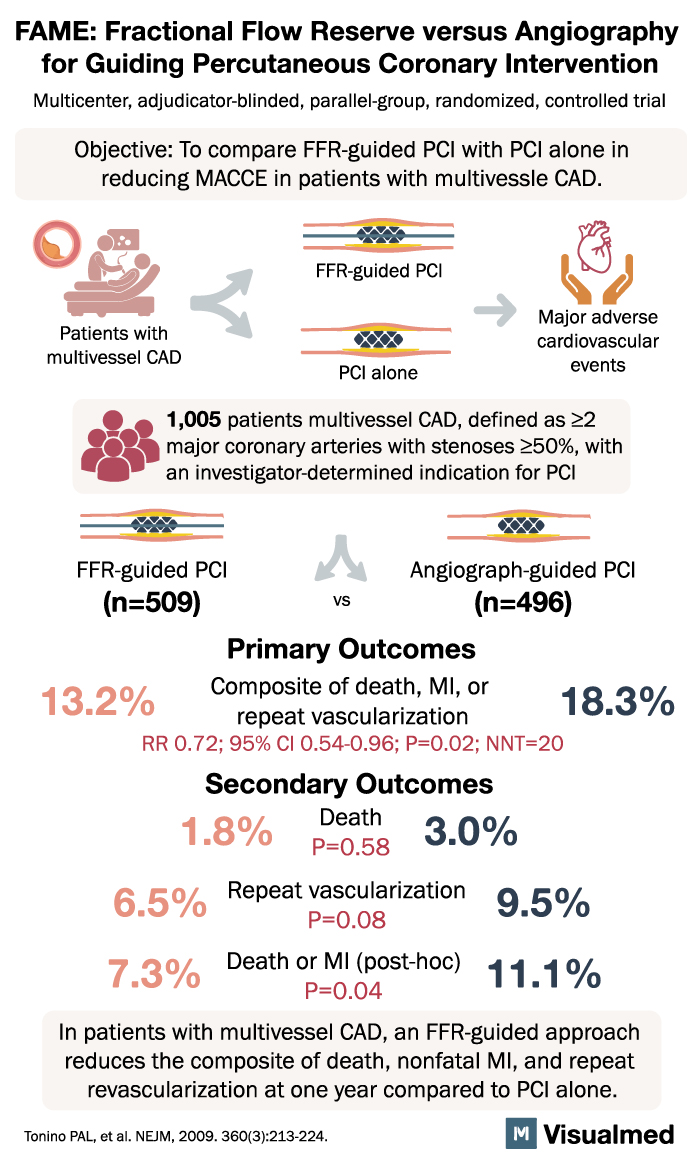
FAME Trial: FFR-Guided PCI Versus Angiography-Guided PCI in Multivessel CAD
The FAME trial was a landmark cardiology trial that changed how interventional cardiologists think about coronary stenoses in patients with multivessel coronary artery disease. Instead of relying only on angiographic appearance, the FAME trial tested whether using fractional flow reserve, or FFR, to guide PCI could improve outcomes compared with angiography-guided PCI alone. The main…
-
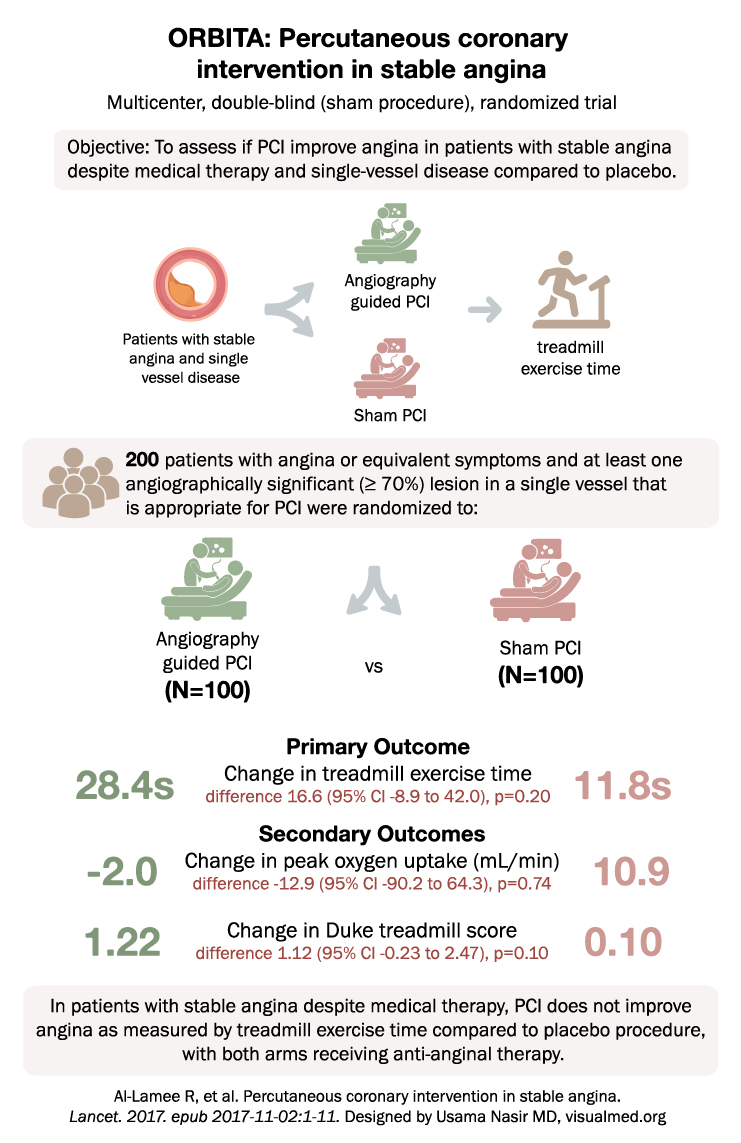
ORBITA Trial: PCI Versus Sham Procedure in Stable Angina
The ORBITA trial was a landmark study in interventional cardiology because it tested whether percutaneous coronary intervention, or PCI, improves symptoms in patients with stable angina when compared with a placebo procedure. Unlike many earlier PCI studies, the ORBITA trial used a double-blind sham-controlled design, making it one of the most rigorous trials ever performed…
-
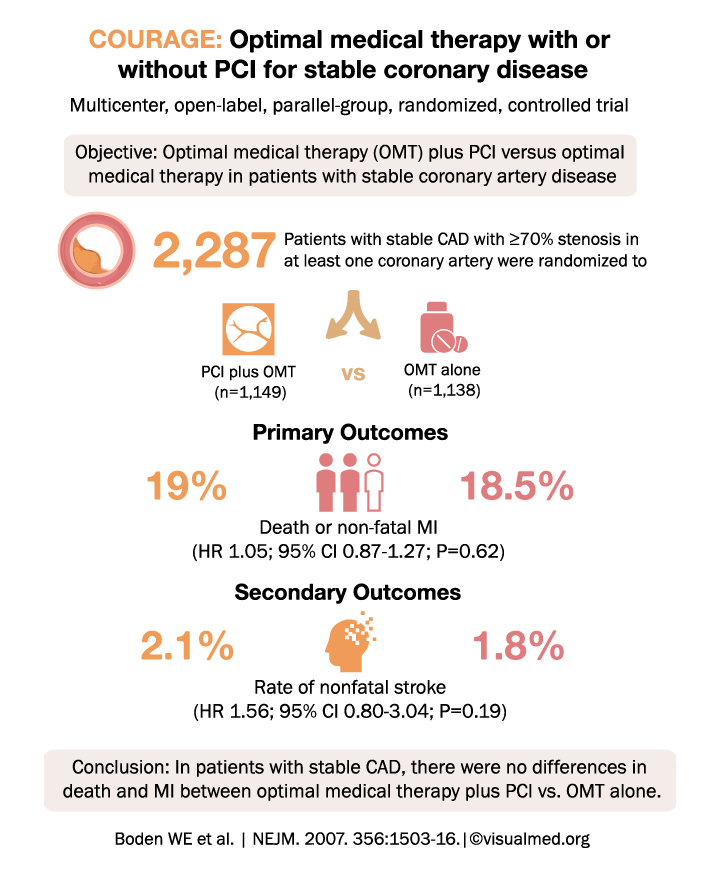
COURAGE Trial: Optimal Medical Therapy With or Without PCI for Stable Coronary Disease
The COURAGE trial was one of the most important landmark cardiology trials because it challenged the routine use of percutaneous coronary intervention, or PCI, in patients with stable coronary artery disease. Before COURAGE, many patients with stable coronary blockages underwent PCI with the expectation that opening the artery would reduce future heart attacks or death.…