
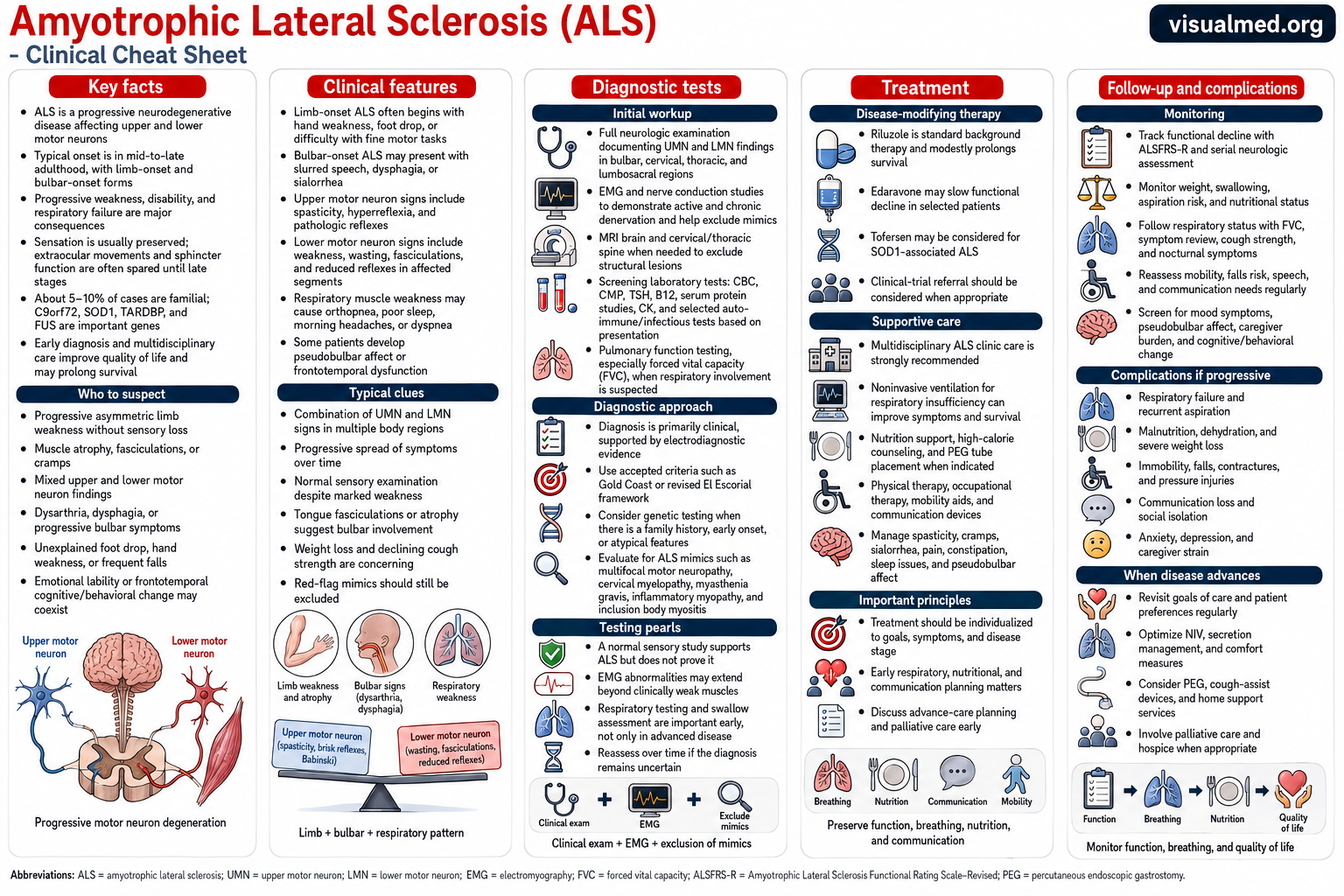
Amyotrophic lateral sclerosis (ALS) is a progressive neurodegenerative disorder that affects the motor neurons responsible for voluntary movement. Degeneration of both upper motor neurons (UMNs) and lower motor neurons (LMNs) leads to progressive muscle weakness, atrophy, impaired mobility, bulbar dysfunction, and eventually respiratory failure.
Although ALS remains a life-limiting disease, earlier recognition, multidisciplinary care, respiratory support, nutritional management, and disease-modifying therapies can meaningfully improve quality of life and, in some patients, prolong survival.
What Is ALS?
ALS is characterized by progressive loss of motor neurons in the brain, brainstem, and spinal cord.
Most patients develop the disease in mid-to-late adulthood. Presentation varies considerably, but two major patterns are commonly recognized:
- Limb-onset ALS: begins with weakness of an arm or leg, hand clumsiness, foot drop, or difficulty performing fine motor tasks.
- Bulbar-onset ALS: begins with dysarthria, dysphagia, impaired tongue movement, or excessive salivation.
As the disease progresses, weakness typically spreads to additional body regions.
Sensation is generally preserved, which is an important distinguishing feature. Extraocular movements and bladder and bowel sphincter function also tend to remain relatively preserved until late in the disease.
Approximately 5–10% of ALS cases are familial. Important ALS-associated genes include C9orf72, SOD1, TARDBP, and FUS.
Clinical Features of ALS
ALS produces a combination of upper and lower motor neuron abnormalities.
Upper motor neuron findings
Typical UMN manifestations include:
- Spasticity
- Hyperreflexia
- Pathologic reflexes
- Increased muscle tone
- Babinski responses
Lower motor neuron findings
LMN involvement may cause:
- Muscle weakness
- Muscle wasting
- Fasciculations
- Muscle cramps
- Reduced reflexes in affected regions
The presence of both UMN and LMN abnormalities across multiple anatomic regions is an important clinical clue.
Bulbar and Respiratory Involvement
Bulbar disease may manifest as:
- Slurred or slowed speech
- Difficulty swallowing
- Tongue weakness or atrophy
- Tongue fasciculations
- Excessive saliva
- Aspiration risk
Respiratory muscle weakness is one of the most important complications of ALS.
Early manifestations may be subtle and can include:
- Shortness of breath
- Orthopnea
- Poor-quality sleep
- Morning headaches
- Weak cough
- Daytime fatigue
Respiratory symptoms should therefore be assessed throughout the disease course rather than waiting until advanced disease develops.
Cognitive and Behavioral Changes
ALS is primarily considered a motor neuron disease, but cognitive and behavioral abnormalities can occur.
Some patients develop:
- Pseudobulbar affect
- Emotional lability
- Executive dysfunction
- Behavioral changes
- Frontotemporal dementia
Recognizing these manifestations is important because they can affect treatment decisions, communication, caregiver burden, and advance-care planning.
When Should ALS Be Suspected?
Clinicians should consider ALS in patients with progressive motor weakness without significant sensory loss, particularly when both upper and lower motor neuron abnormalities are present.
Potential warning signs include:
- Progressive asymmetric limb weakness
- Foot drop
- Hand weakness or loss of dexterity
- Muscle wasting
- Fasciculations
- Persistent muscle cramps
- Dysarthria
- Dysphagia
- Frequent unexplained falls
- Progressive weakness spreading from one region to another
- Tongue fasciculations or atrophy
A normal sensory examination despite substantial weakness can provide an important diagnostic clue.
How Is ALS Diagnosed?
There is no single laboratory or imaging test that definitively diagnoses ALS.
Diagnosis is primarily clinical, supported by electrodiagnostic testing and exclusion of alternative disorders.
Neurologic examination
A detailed examination should assess for UMN and LMN abnormalities across the:
- Bulbar region
- Cervical region
- Thoracic region
- Lumbosacral region
Clinicians look particularly for progressive involvement of multiple motor regions.
Electromyography and nerve conduction studies
Electromyography (EMG) is a central component of the diagnostic evaluation.
It may demonstrate evidence of:
- Active denervation
- Chronic denervation
- Reinnervation
Importantly, EMG abnormalities can sometimes be detected in muscles that are not yet clinically weak.
Nerve conduction studies also help identify alternative diagnoses, particularly peripheral neuropathies.
MRI
MRI of the brain or cervical and thoracic spine may be obtained to exclude structural disorders that can mimic ALS, including spinal cord compression or cervical myelopathy.
Laboratory testing
Laboratory testing is generally aimed at excluding alternative explanations for progressive weakness.
Depending on the clinical presentation, testing may include:
- CBC
- Comprehensive metabolic panel
- Thyroid testing
- Vitamin B12
- Creatine kinase
- Serum protein studies
- Selected infectious or autoimmune testing
Respiratory assessment
Pulmonary function should be evaluated early and followed over time.
Forced vital capacity (FVC) and other measures of respiratory muscle function can help identify developing respiratory impairment.
Swallow evaluation may also become important as bulbar dysfunction progresses.
Conditions That Can Mimic ALS
A number of neurologic and neuromuscular disorders may resemble ALS.
Important considerations include:
- Cervical myelopathy
- Multifocal motor neuropathy
- Myasthenia gravis
- Inflammatory myopathy
- Inclusion body myositis
- Peripheral neuropathies
- Structural spinal cord disease
Correctly identifying a treatable mimic is one of the most important reasons for a careful diagnostic evaluation.
Genetic Testing
Genetic evaluation is increasingly important in ALS.
Testing should particularly be considered in patients with:
- A family history of ALS
- Early-onset disease
- Associated frontotemporal dementia
- Clinical features suggesting hereditary disease
Genetic results can have implications not only for family counseling but also for treatment, as therapies targeting specific genetic forms of ALS are emerging.
Treatment of ALS
ALS management combines disease-modifying treatment with extensive supportive care.
Riluzole
Riluzole remains a standard background treatment for ALS and has demonstrated a modest survival benefit.
Edaravone
Edaravone may reduce the rate of functional decline in selected patients.
Tofersen
Tofersen is a targeted therapy for patients with ALS caused by mutations in the SOD1 gene, representing an important step toward genetically targeted ALS treatment.
Appropriate patients should also be considered for participation in clinical trials evaluating new therapeutic strategies.
Multidisciplinary Care
One of the most important aspects of ALS treatment is coordinated multidisciplinary management.
Care teams may include:
- Neurologists
- Pulmonologists
- Respiratory therapists
- Dietitians
- Speech therapists
- Physical therapists
- Occupational therapists
- Palliative-care specialists
- Social workers
Multidisciplinary ALS clinics allow respiratory, nutritional, functional, communication, and psychosocial problems to be addressed simultaneously.
Respiratory Support
Progressive respiratory muscle weakness is a major determinant of symptoms and survival.
Noninvasive ventilation (NIV) can improve respiratory symptoms, sleep quality, and survival in appropriately selected patients.
Additional respiratory interventions may include:
- Cough-assist devices
- Secretion management
- Airway-clearance techniques
- Treatment of excessive salivation
- Monitoring for nocturnal hypoventilation
Respiratory planning should begin before severe respiratory failure develops.
Nutrition and Swallowing
Weight loss is common in ALS and may result from:
- Difficulty swallowing
- Increased energy requirements
- Reduced oral intake
- Weakness limiting food preparation or feeding
Patients should be monitored closely for declining weight and aspiration risk.
Strategies may include:
- High-calorie nutritional counseling
- Texture modification
- Swallowing therapy
- Supplemental nutrition
A percutaneous endoscopic gastrostomy (PEG) tube may be considered when maintaining adequate oral nutrition becomes difficult or unsafe.
Mobility and Communication
Progressive weakness can eventually affect nearly every daily activity.
Supportive interventions may include:
- Physical therapy
- Occupational therapy
- Braces
- Walkers
- Wheelchairs
- Home modifications
- Assistive communication devices
Because speech may progressively deteriorate, communication planning should begin before severe dysarthria develops.
Symptom Management
ALS can cause numerous symptoms beyond weakness.
Treatment may be needed for:
- Spasticity
- Muscle cramps
- Sialorrhea
- Pain
- Constipation
- Sleep disturbances
- Pseudobulbar affect
- Anxiety
- Depression
Management should be individualized according to the patient’s symptoms, priorities, and stage of illness.
Monitoring Disease Progression
Patients require regular reassessment as ALS progresses.
The ALS Functional Rating Scale–Revised (ALSFRS-R) is commonly used to track changes in daily function.
Follow-up should also assess:
- Muscle strength and mobility
- Falls
- Respiratory function
- Cough effectiveness
- Swallowing
- Body weight
- Nutritional status
- Speech and communication
- Cognitive and behavioral symptoms
- Mood
- Caregiver burden
Changes in respiratory symptoms, nutritional status, or swallowing may require particularly rapid intervention.
Complications of Advanced ALS
Progressive ALS can ultimately lead to:
- Respiratory failure
- Recurrent aspiration
- Malnutrition
- Severe weight loss
- Immobility
- Falls and injuries
- Contractures
- Pressure injuries
- Loss of verbal communication
- Social isolation
- Psychological distress
- Increasing caregiver burden
These complications highlight why ALS management requires considerably more than simply prescribing disease-modifying medication.
Advance-Care and Palliative Planning
Goals of care should be revisited throughout the disease course.
Important discussions may include preferences regarding:
- Noninvasive ventilation
- Feeding tube placement
- Invasive ventilation
- Communication support
- Home care
- Symptom management
- End-of-life care
Palliative care can be introduced early and provided alongside disease-directed treatment. Its role is not limited to the final stages of ALS.
The Takeaway
ALS is a progressive disease involving both upper and lower motor neurons, with progressive weakness, muscle wasting, fasciculations, bulbar dysfunction, and respiratory impairment forming the core clinical picture.
Diagnosis relies on a careful neurologic examination, EMG, and exclusion of important mimics. While ALS currently has no cure, treatment has expanded beyond supportive care. Riluzole, edaravone, genetically targeted therapy such as tofersen in SOD1-associated ALS, respiratory support, nutrition management, mobility assistance, and multidisciplinary care can all play important roles.
Perhaps most importantly, ALS care should anticipate problems before they become crises. Early respiratory, nutritional, communication, mobility, and advance-care planning can make a substantial difference in the patient’s quality of life throughout the disease course.
This article is intended for educational purposes and should not replace individualized medical evaluation or treatment.